
What Is Brit Shalom?
When a new Jewish baby comes into the family, it’s prime time to gather and celebrate. Traditionally, on the eighth day of life, babies assigned male at birth have a brit milah, during which they’re circumcised and given their Hebrew name. But what about families opting out of circumcision? Brit shalom encompasses a variety of ceremonies specifically for these families. It’s a baby naming—and a whole lot more.
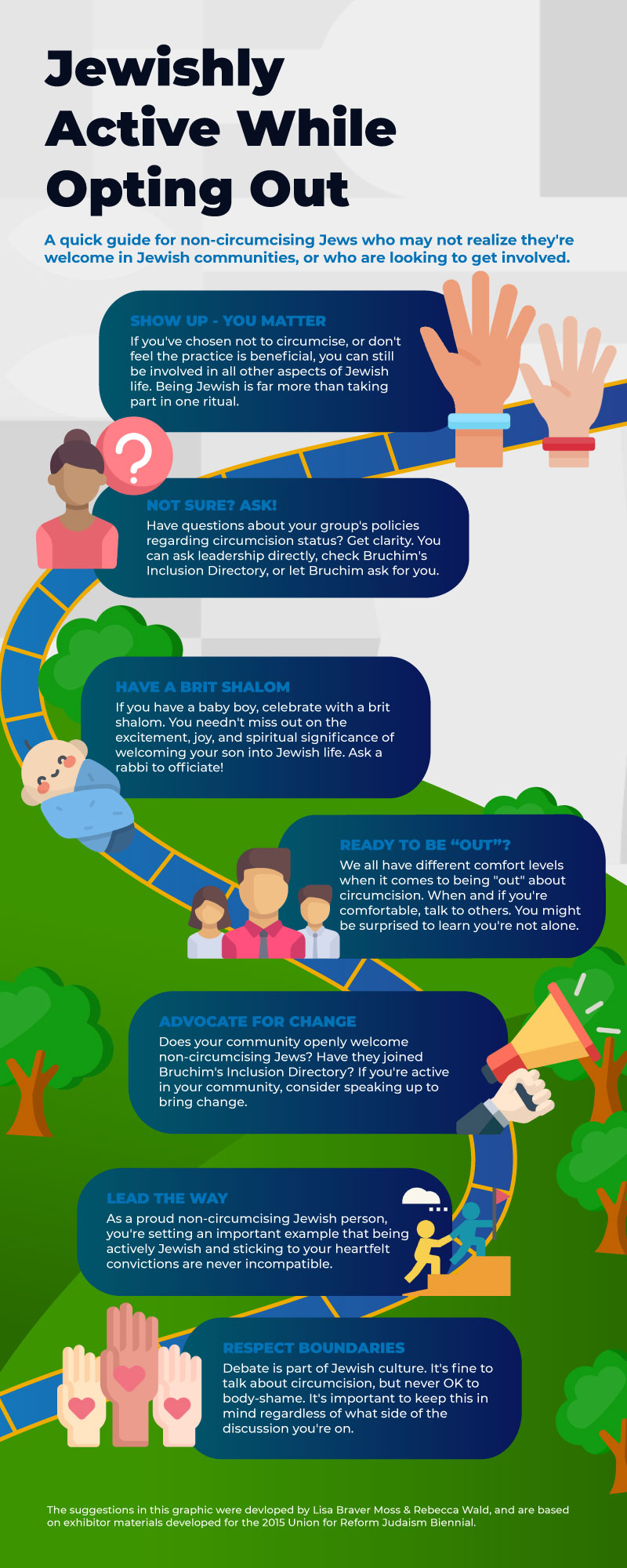
A brit shalom is also a sign of the ancient Abrahamic covenant—and a declaration of intent to bring up the child Jewishly. A deeply spiritual and joyful act, brit shalom is a statement of pride in being both Jewish and a non-circumcising member of the community.
Aren’t Jewish Naming Ceremonies Already Popular?
Many American Jewish parents have their sons circumcised in the hospital, without any accompanying religious ritual, alongside their non-Jewish peers—a practice that became widespread in the mid-20th century. When we talk about Jewish naming ceremonies for boys, there’s often an unspoken assumption that circumcision has already taken place in the hospital. Although this practice, like brit shalom, does not conform to traditional Jewish law, it is widely accepted within non-Orthodox Jewish movements.
Brit shalom, by contrast, is specifically for babies who are not circumcised. Why does this distinction matter? For many non-circumcising Jews, it comes down to spiritual authenticity, honesty, and openness. When circumcision goes unmentioned, families may be left wondering whether their choices are truly accepted—or whether they are expected to keep them private. Brit shalom removes that ambiguity, allowing families to celebrate their child’s Jewish identity while openly and proudly affirming their choice not to circumcise.
Is Brit Shalom Just for Boy Babies?
Not necessarily. Brit shalom was originally conceived as an alternative to brit milah for Jewish boys, and many non-circumcising families continue to observe that distinction, choosing brit shalom for a son and a traditional Jewish baby naming for a daughter.
Unlike brit milah, which traditionally takes place on the eighth day of life, Jewish naming ceremonies for girls have no fixed date. In some communities, a girl’s Hebrew name is announced during a Torah reading, often on the first Shabbat following her birth. Other families hold a separate welcoming ceremony, sometimes called simchat bat (“celebration of a daughter”) or brit bat (“covenant of a daughter”), at home or in a synagogue. These celebrations may take place in the first few weeks of life or later, whenever the family is ready to gather.
Other families prefer to celebrate brit shalom for all their children, regardless of sex. Parents who have welcomed a son with a brit shalom may wish to do the same for a daughter, establishing a family tradition that reflects their Jewish identity and egalitarian values.
Brit shalom can also be adapted for intersex babies (born with sex characteristics that do not fit typical definitions of male or female), as well as for families who prefer welcoming ceremonies that do not emphasize distinctions based on sex or gender.
Ultimately, brit shalom is a flexible tradition that families can adapt to reflect their beliefs, values, and understanding of Jewish life.
Ways to Have a Brit Shalom
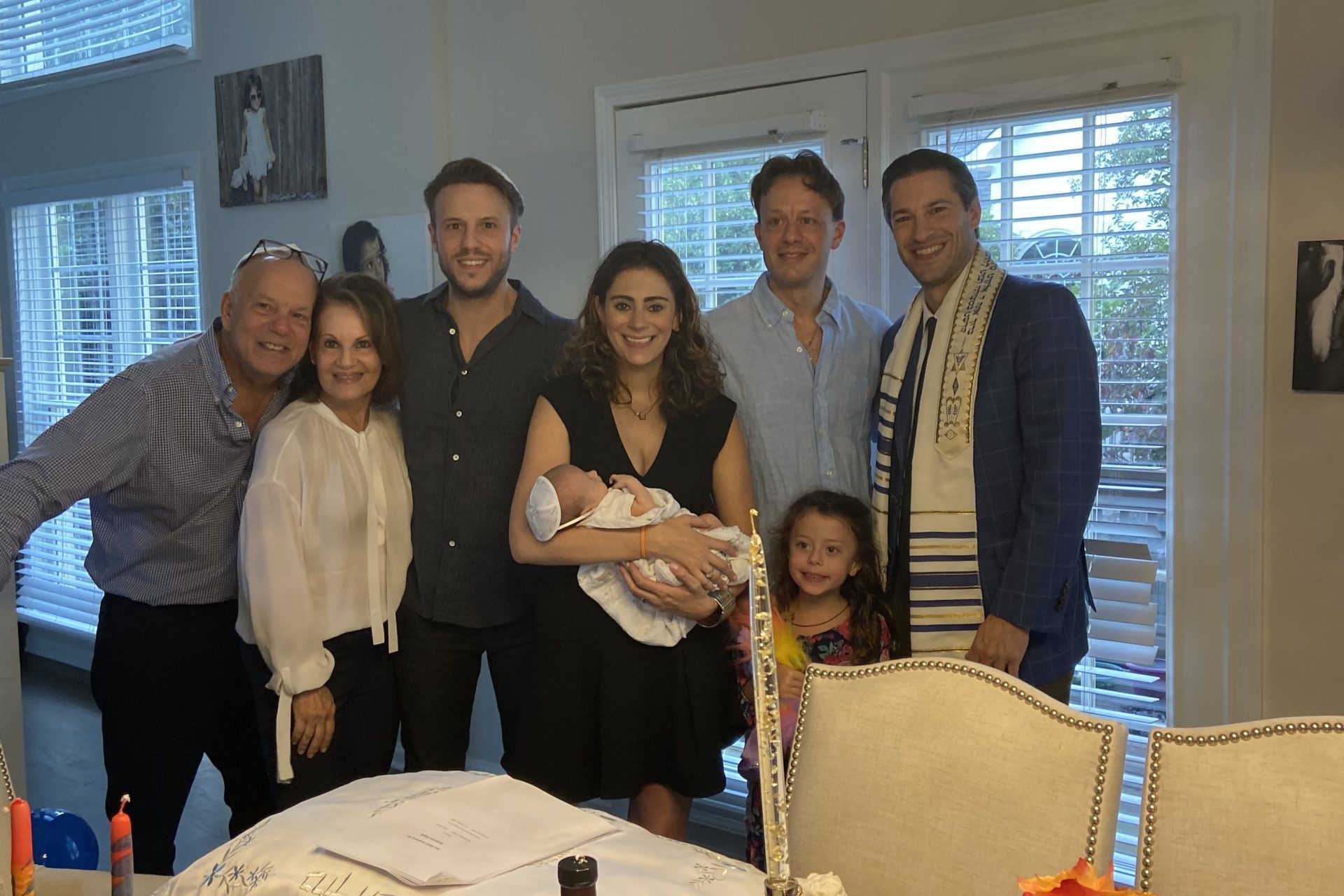
When it comes to celebrating a brit shalom, families have plenty of options. A rabbi-led ceremony in a synagogue is one possibility, but brit shalom can also take place at home, outdoors, or in another meaningful setting. A family’s connection to congregational life, the time of year, and what feels most comfortable for parents and baby can all influence the choice of location.
Timing is flexible, too. Some families choose to follow the traditional eighth-day observance associated with brit milah, while others schedule their brit shalom for a time that works best for them. For families celebrating on the eighth day, the comfort and convenience of a home ceremony may be especially appealing.
Brit Shalom Basics
If your family is planning a brit shalom, you may want to assign ceremonial roles to loved ones, such as kvatter and sandek, who are traditionally honored participants in Jewish welcoming ceremonies. Depending on the ceremony you choose, you may also want to have certain items on hand, including selected prayers, kosher wine, a kiddush cup, challah, a ceremonial chair, and a pillow for the baby.
For guidance on what you might need and why, consider Celebrating Brit Shalom (Notim Press, 2015). This practical guide includes three complete ceremonies, helpful planning advice, and original songs. It’s designed for families whether they choose to have clergy officiate or prefer a do-it-yourself approach.
How to Have a Brit Shalom
Brit shalom draws on many of the same traditions as brit milah, including blessings, prayers, the giving of a Hebrew name, and welcoming the child into the Jewish covenant. Parents and clergy can choose readings and rituals that are meaningful to their family while preserving these familiar elements of Jewish tradition.
Many families have chosen to make the cutting of a pomegranate the central ritual of their brit shalom, replacing circumcision with a symbolic act. The pomegranate, with its many seeds, is a traditional Jewish symbol of fertility, abundance, and the mitzvot (commandments). Other families incorporate rituals such as wrapping the baby in a tallit (prayer shawl) or gently washing the baby’s feet with warm water. Foot washing has roots in the Torah, where it is described as an act of hospitality and welcome.
These symbolic acts offer families meaningful ways to celebrate their child’s entry into the Jewish covenant while making the ceremony their own.
What Happens After Brit Shalom?
Jewish services and celebrations are often followed by a festive meal, and brit shalom is no exception! Sharing food is a wonderful way to bring family and friends together and extend the joy of welcoming a new baby. But new parents have plenty on their plates already, so there’s no need to make things complicated. Ordering in, inviting guests to bring a favorite dish, or arranging a catered meal are all great options. Whether your celebration is elaborate or simple, what matters most is being together.
It’s also worth remembering that the newborn period can be exhausting. Keeping the gathering relatively short and relaxed gives everyone a chance to celebrate while allowing parents and baby some much-needed rest and quiet afterward.
How Did Brit Shalom Start?
Although some Jews throughout history have chosen not to circumcise, the development of alternative Jewish welcoming ceremonies for boys is relatively recent.
One of the earliest known examples dates to around 1970, when Rabbi Sherwin Wine, founder of Humanistic Judaism, began offering Jewish welcoming ceremonies without circumcision. Rabbi Wine advocated naming ceremonies for children regardless of sex, reflecting the Humanistic Jewish movement’s commitment to equality and its rejection of circumcision as a religious requirement.
By the mid-1980s, other Jewish leaders were developing alternatives to brit milah. Among them was Rabbi Nathan Segal (1949–2019), a musician and spiritual leader who helped pioneer brit shalom ceremonies outside the Humanistic Jewish movement.
For many families, however, finding a rabbi willing to officiate was difficult, if not impossible. Brit shalom was unfamiliar to most Jewish clergy and well outside mainstream religious practice. So parents got creative, and a grassroots movement began to take shape.
Families developed their own ceremonies, drawing on traditional Jewish blessings, prayers, and naming rituals. Parents shared the names of sympathetic rabbis and other willing officiants, while newly created liturgies circulated from family to family and rabbi to rabbi. Photocopied pages, often stapled together and passed along informally, became some of the earliest resources for celebrating a brit shalom. Bruchim’s archives contain examples of these early ceremonies.
In the early 2000s, retired physician Dr. Mark Reiss helped make brit shalom more accessible by compiling an online directory of rabbis and other officiants willing to lead these ceremonies. His pioneering work eventually became Bruchim’s Inclusion Directory.
The publication of Celebrating Brit Shalom (Notim Press, 2015) marked another milestone, bringing together complete ceremonies, practical guidance, and original music in a book specifically designed for non-circumcising Jewish families.
What began as a largely informal, family-driven effort has grown into an increasingly recognized option for Jewish families seeking to welcome their children into the covenant without circumcision.
Humanistic Judaism: An Early Advocate
One notable exception to the difficulties faced by non-circumcising Jewish families has been Humanistic Judaism. Founded in the early 1960s by Rabbi Sherwin Wine, this nontheistic Jewish movement has long rejected circumcision as a religious requirement. Rather than using the term brit shalom, Rabbi Wine advocated Jewish naming ceremonies for all children, regardless of sex.
Celebrants of Brit Shalom
In the early 2000s, Mark Reiss, M.D., a retired radiologist and active member of a Conservative congregation, recognized a pressing need: Jewish families choosing not to circumcise often struggled to find clergy willing to officiate at a welcoming ceremony.
Determined to help, Dr. Reiss created an online directory of willing officiants, eventually connecting families with more than 150 rabbis, cantors, and lay celebrants across the United States and around the world.
After decades of maintaining this invaluable resource, Dr. Reiss generously collaborated with Bruchim to incorporate his directory into our expanded Inclusion Directory, which connects families with welcoming clergy, synagogues, and other Jewish institutions. Bruchim is proud to build on his pioneering work and carry it forward.
Brit Shalom Ceremonies Today
Brit shalom has come a long way from its grassroots beginnings. Yet despite growing awareness and acceptance, many Jewish websites, parenting guides, and educational resources still overlook alternatives to brit milah.
At Bruchim, we believe that meaningful inclusion begins with acknowledging the diversity of Jewish families and their choices. Through our Inclusion Directory, personalized Concierge Service, free brit shalom ceremony resources, and educational initiatives, we’re working to ensure that non-circumcising families have the support they need—and that Jewish communities are better prepared to welcome them openly and wholeheartedly.